Best Laid Plans…

Well…that didn’t pan out. I really thought I would post regularly. I did become more consistent with my personal journaling, and I started a storytelling project about my life for family, but I posted nothing on this blog since January. My Mom used to lament with a resigned sigh, “Best laid plans…” when something had not gone the way she intended.

Life has definitely been busy. It is just never dull around here. I remember wondering after our seventh child Ben was born, how long it would take until things “got back to normal” again. They never did. It took years before I realized that life was a series of new “normals,” one after another. Some call them seasons. In the tough seasons like those of poor health or great stress it can be hard to see any positives or hold out hope.
A lot has happened in the last year, both good and not so. I had back surgery in October and thankfully, it proved to be very successful. Two lumbar vertebrae were fused, remodeled and fixated, the disc between them removed and replaced with a cage of sorts that fills in with bone. It was a rough recovery process, but I have been in less pain from lumbar stenosis than ever in ten years! As I increased my walking time, which was crucial to recovery, my hips began to hurt more and more. I’d had a steroid injection in my right hip in the past with some relief, so we repeated the injections on both sides.

The left hip got better but the right got worse. An MRI showed that the ball of the joint was eroding because of no blood supply, this is called Avascular Necrosis or AVN. After a round of physical therapy we scheduled a total hip replacement in June. It was interesting but frustrating that the surgery was designated as “elective.” I guess the ball has to completely collapse, or one’s hip needs to actually fracture before the surgery is deemed urgent. There were months of waiting and scheduling while my AVN became more painful and debilitating. Regardless, it was another really successful surgery! The recovery pain was not as bad as the back surgery had been, but it was more disruptive because ambulation was affected for weeks. If you are considering it, I’d say that I would do it again in a heartbeat for the relief. And…it actually looks like I will need it again. The left hip pain is worsening, its ball eroding, so it is only a matter of time.

Around this time we decided to “go multi-generational.” Our fourth daughter and her family moved in with us. Their house will be sold, and then this house will be sold, and we’ll find something bigger for us all to move into. Moving them in and emptying their house was a busy and frenetic time. Luckily, I had a new hip and attacked the projects like the Bionic Woman. It was and is a fulfilling and exciting adventure.

The health gauntlet continued on with another biopsy for basal cell carcinoma. This time it was on my forearm–at least not my face. We caught it early and the surgeon simply cut an elliptical border around the biopsy site and pulled the edges together with sutures. It went fine–but it triggered lymphedema because of the lymph nodes removed from that arm in 2022. The treatment for that was wrapping my arm up like a mummy, causing my hand and wrist to swell, pinching a nerve which increased wrist and hand arthritis pain. Who would think that a hand and wrist could hurt so much? I got steroid injections at the base of my thumbs but it hasn’t given the relief I would have liked. The hand surgeon said it’s only time before he’ll need to remove the trapezium bones from each wrist because the have basically dissolved. Oh joy!

If you’ve read to this point, thank you. I am fully aware that it could be so much worse. I know that I am blessed to be alive at 63. When I whine, I do immediately think of loved ones. I think of young people who have cancer or other serious diagnoses, who have much more burdensome crosses to bear. God please be with them. Our sweet foreign exchange student from early on at the Abbey Farm is going through stage 4 cancer treatment. Please pray for her and her family. She is full of gratitude and perseverance; the treatment is difficult. She is an inspiration.

“Just keep swimming,” the character Dori repeated in Finding Nemo. “Do the next right thing,” Anna sang in Frozen 2 as she climbed out of a deep cave, laden with grief. Often I’ll repeat these two quotes like mantras. The next step, I realize, may not be a large or obvious foothold. It is often more like a wobbly little pebble that seems insignificant or futile, but never give up hope.
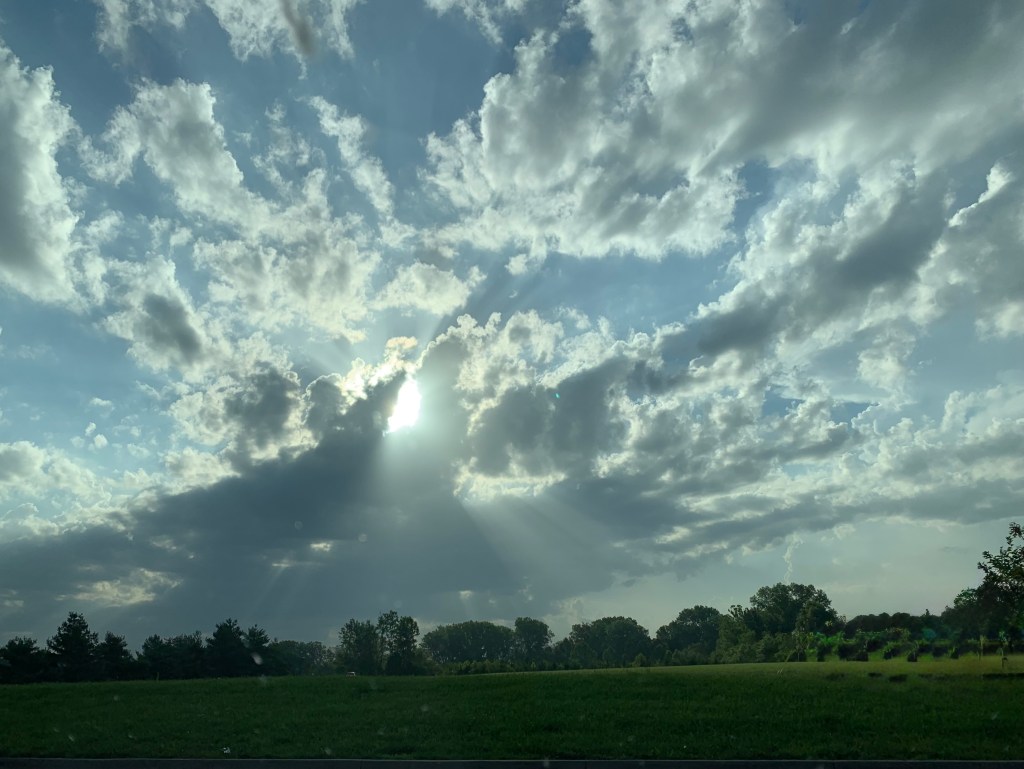
There is a well-known Christian poem called Footprints in the Sand attributed to a woman from 1936 named Mary Stevenson. Mary had a dream in which her life was illustrated as a walk on the beach with Jesus, footprints trailing behind them in the sand. Looking back, she asked Jesus why in the hardest of times of her life there were only one set of footprints. In the poem Jesus lovingly replies that he had not left her alone; indeed, when it was just one set of footprints, they were his, carrying her.

May Jesus carry us each through our most difficult and unexpected times, even if we do not recognize him.
Hope and Joy

We are moving soon, and for the first time in six decades on the planet I will live in the city! The country mouse moves to the city–well, suburbs. I will miss my old houses and the decorating style that blended so well with them. I grew up in the 60s and 70s and was very happy to leave behind the orange shag rugs, the avocado green and harvest yellow appliances, and the Colonial Americana textiles. The house we just bought was built in the year of my birth–1963! Mid-Century modern is NOT my style, having lived through the real thing. I do admit to a bit of nostalgia for Coppertone wall ovens. I could like that again.

Moving is a big deal. There is so much work ahead, packing up and downsizing 5000 square feet into roughly half that. Compared to all of the other recent changes in my life I am reminded that it is not insurmountable. In fact, I am looking forward to it.

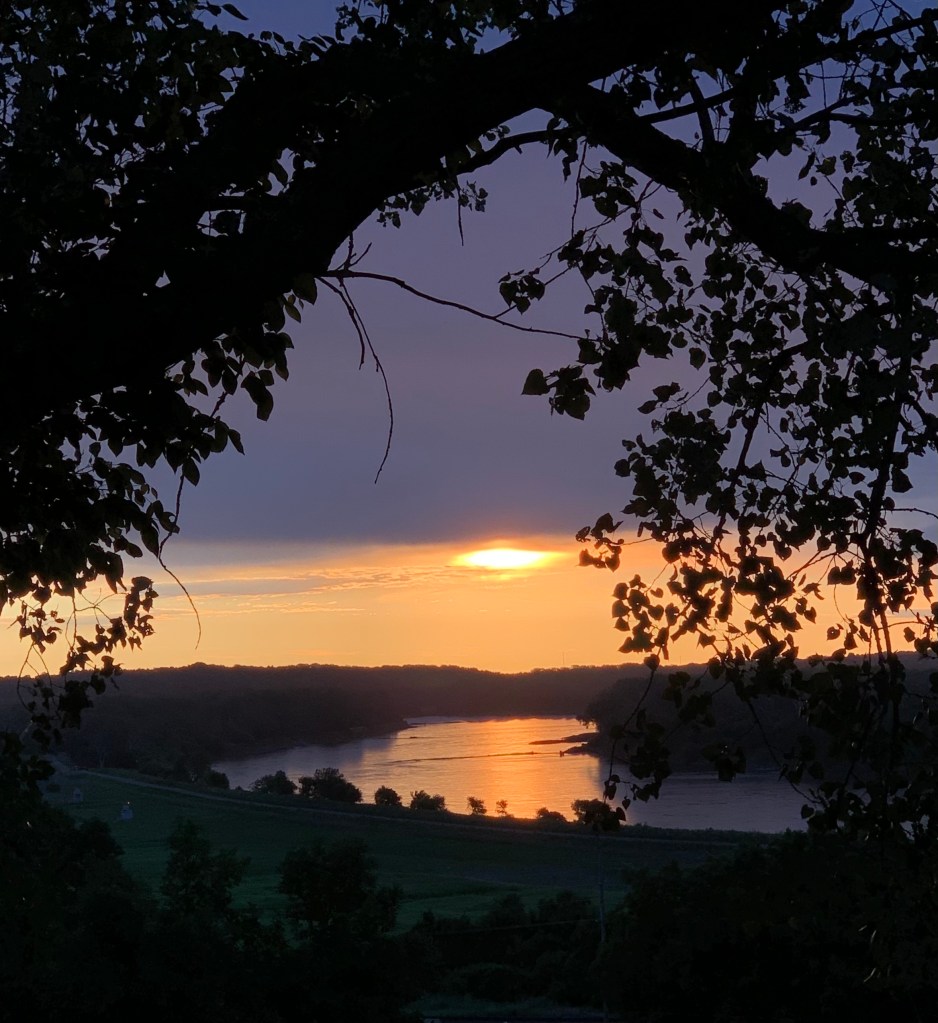
Although I will miss the gorgeous vistas I have been blessed to see daily, the winding Missouri River, the distant hills, and inviting woods, I am envisioning a simpler life. We are having a fence installed and I’ll work on a cottage garden, as much as my back will allow. A window over my sink will invite tranquility within as I wash up after meals. This will become the stuff of my daily vistas.

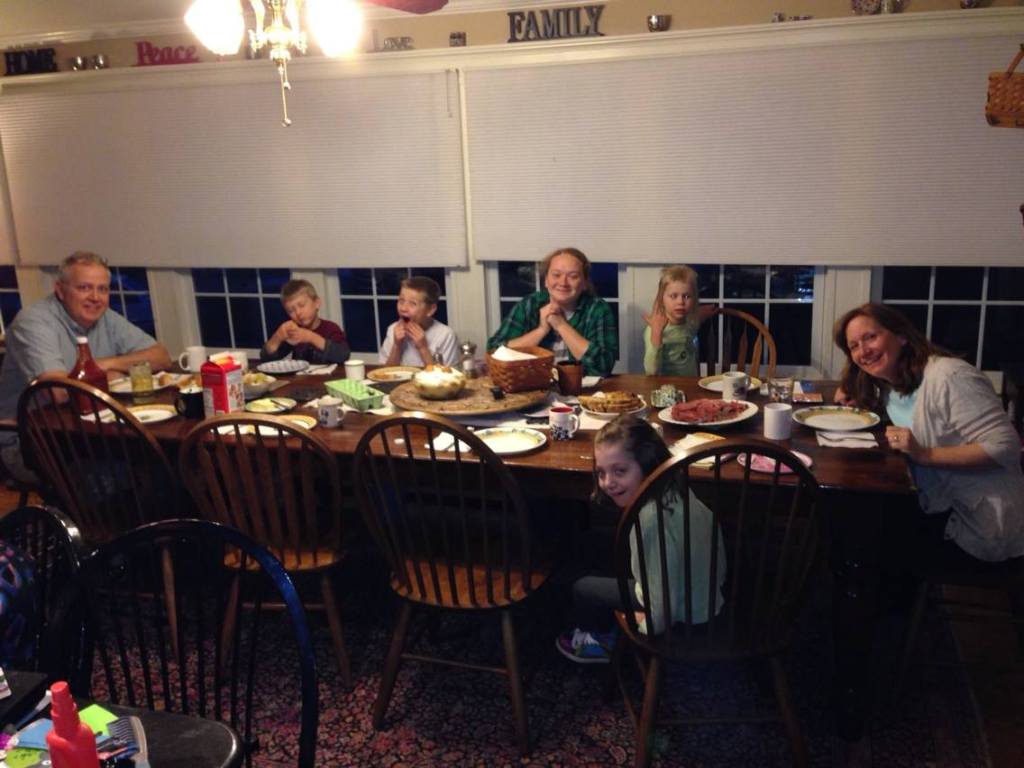
Those meals will be smaller, as I learn to cook for fewer and fewer on a daily basis. One of our sons will be moving out on his own when we pack up this old house, and another will be head to college in the fall. But I have visions of big family Sunday dinners. We will be a few houses up from one of our daughters, her husband and our one-year-old grandson. We’ll be an hour closer to my pioneer-woman daughter in the hills of Central Missouri. and still within a day’s drive of our two oldest daughters and their families. I can hope that one day they will move yet closer.

I really think that the years growing up watching The Waltons imprinted on me a desire for a large family. It is not for everyone, but I count blessings that this came true for me. We don’t travel as other friends do who have smaller families. One good friend of my late husband and mine, with whom we vacationed regularly, travels out of the country once or twice a year. Another good friend is in Kenya as I write. These travels are not possible for us now, and any envy I feel is instantaneously replaced with happiness for them and gratitude for all I do have.

Gratitude is “where it’s at.” It keeps us focused on what is real, and fills us to overflowing with hope and joy.

Patience

As a parent of ten children, the teen years have gone on in our home for a few decades now. There are wonderful things about these years, but there are challenges, as well. We’ve had some self-motivated, straight-A children, some who fall terribly behind and then a few in between. When the oldest are the high achievers, it is hard not to expect that the younger children will follow suit.

But they are each unique. And each deserves to be their own individual person, including what kind of student they are. They all need one-on-one time with their parents. This is more challenging in big families, but it must happen, even if it must be planned ahead. In a former blog I told stories of the many adventures on and off our Abbey Farm. Now we live on an Army Post and up until a couple months ago, had 6 (!) teens under one roof. The oldest recently turned twenty and is in the Army Reserves deciding on what college degree to pursue.

The fourteen-year-old has been making up school-work and was just in my room complaining about monotony. Oh, the many things I could have depressed him about in terms of monotony ahead in his future. I told him that he really was developing character, and that little jobs went a long way. Tidying up an area, taking a walk or bike ride. The twenty-year-old was home and I asked him to take his brother out for a drive, maybe get a milkshake. A change of scenery is always a good idea when we are in rumination mode.

For myself, I am in a bit of self-isolation, undergoing chemotherapy for breast cancer. It’s all been a shock of a summer, totally unexpected and I will neither elaborate, nor make light of it. A new normal begins once again. Much patience is required. I realize the importance of each of my children, and how I still want to be present in their lives while fighting a disease. They have all been supportive and reacted with such love and care and help. My husband has been my lifeline.

Friends have been so helpful, and some from long past have reconnected; it has been truly a gift. None of us looks forward to adversity, but in truth, it often sheds light on the very best things in life. It requires resilience through faith, a strong network of family and friends, and a lot of patience.

Dream Griever

Life does not always go as expected. Despite how hard we plan and work, sometimes our dreams do not come true.

We may follow a healthy diet, but an illness or an accident suddenly changes everything. We might plan a certain course of study but then there is no job available, or life events keep us from accepting that dream job.

It is too easy to cast blame, become disgruntled and negative. What is healthier and necessary is to do the work of grieving the unattained life-course. Only then comes acceptance and the realization that where we are at this moment holds potential. We are each a work in progress; the masterpiece of our life is unfinished.

My friend Marilyn was ordained and educated at Boston University during the late 1950s and 1960s. She was mentored by civil rights and academic giants including Dr. Howard Thurmon and earned her doctorate to became a pastoral counselor. Marilyn longed to found a retreat center. She had a fully visualized plan, obtained necessary licenses, aligned herself with the right people, amassed supplies, furniture and know-how, ran many group conferences, and yet she never saw her full dream to fruition. She came close a few times. We spoke recently about how it was necessary for her to grieve this life-long dream.

It is easy for me to see all of the good that Marilyn has done throughout her life for individuals and for the communities in which she has lived. She does acknowledge some of this, but it has been important for her to grieve the original dream. She goes about this while at the same time dealing with severe, chronic pain issues and an adult daughter who continues to require significant support. Day by day Marilyn faces her challenges, continues to take one generative step after another, and strives to remain grateful.

Over coffee we caught up on events and made plans to tour a local botanical garden that features a “Monet Pond.” Marilyn will be 89 at the end of the summer. When I left her house she was taking a phone call from a young man seeking help with his girlfriend. As I closed her door I heard the tone of her voice shift to that of a caring professional. I quietly smiled, feeling proud and inspired.

Marilyn hasn’t created the retreat center that she’d always dreamt of but she has forever changed countless lives, including my own. I hope that one day she is fulfilled by the alternate, unplanned course in her life that blessedly intersected with ours.

Polyanna

If you have not seen the movie Polyanna with Haley Mills and Richard Egan, I recommend it highly. It is a children’s movie adapted from the book of the same title by Eleanor H. Porter. It is entertaining and moving. Polyanna is an orphan who goes to live with a wealthy aunt. Her life has been very difficult and yet she has adopted an attitude of gratitude and positivity that is her strength, and far from annoying, becomes inspirational to all who know her.

The word Polyanna has since been used as an adjective to describe unrealistic, starry-eyed idealism. Toxic positivity is a more modern and extreme concept today, purposely ignoring the actual distress of what another is going through. It is more dismissive than just a lack of social grace. I propose that ignorant bliss and the slang, synonymous interpretation of Polyanna is at one end of a positive philosophy, and toxic positivity is at the other. Both are extremes. At the center is a more balanced state, the actual example of the character Polyanna, and perhaps it is very much needed at this time.

I feel immensely blessed by friends from so many different walks of life. Rather than surround myself only with those who adhere to my beliefs, I am challenged by friends who have different theologies, philosophies and world views. Throughout the political ping-pong match of the last few decades in the United States I have witnessed a similar back-and-forth of reactions by those who hold one view or another. My prayer has been in each instance that hearts will remain hopeful, wills determined, anger channeled constructively, and heads cool. For those who are relieved or exuberant with various changes, I hope that they have compassion, not contempt, for those who feel the opposite.

In the news and on social media we see too many instances of rudeness and hatred. The constant presence of negativity on our televisions, computers and hand-held devices does great damage–if we let it. Fake news, strawman arguments and false narratives abound. If evil has a persona then its greatest tactic is to divide, then stand back and watch us destroy each other.

We can resist. We can strive to maintain peace and hope in our homes and communities. We can be more like Polyanna and inspirational, historical figures who despite poor odds and circumstances worked steadfastly, lovingly and peacefully for the good of others.

Pig

Movie reviews laud Nicholas Cage’s performance as his finest, in the newly released movie “Pig.” Heavy-handed treatments of deep, emotional events caused me to feel that the movie fell short of what it could have accomplished. I am, however, glad that I saw it. Without spoiling the story, Nicholas Cage’s character has found a peaceful existence in the ultimately depressing and hopeless world where “nothing matters.”

And yet, his journey shows us that perhaps some things really do.

Embedded in his existential angst and hopelessness there exists a truth indicating just the opposite. Think of the “Titanic” scene in which the lower class mother trapped below decks, peacefully tucks her children into bed and continues their precious and loving routine. Consider inspirational, historic persons, some of whom I have written about previously, slaves and prisoners who strove to make life sweeter for others in the face of hopelessness and tragic inhumanity.

Even in the face of an unknown future, loving intent, service and selflessness matter.

Mindset

My children talk to me about what they encounter on the internet. We’ve set the parental controls that we know of, and try to limit time on devices. I check most of their devices, as well, and respect friends who don’t even allow them. Truly. I gave in somewhat compared to others. My kids think I’m overly strict so I must be somewhere within the right wavelength of parental involvement.

Most of the time what videos they show me and stuff they discuss is fun and entertaining, but when it gets close to disturbing they know we will discuss it. “Disturbing” includes YouTubers who post depressing and negative views about life or politics, the state of world culture or social view. I really prefer to help them to understand where the poster came from, what must be informing their experience and opinions. I really dislike it when my kids talk down about a person or viewpoint. A difference of opinion is fine but I tell them I’d rather hear them express dismay and a lack of understanding about a viewpoint they are offended by or disagree with — rather than talk down about that person.

It is a learning process. I am not perfect and they know that. So, more discussion.

Recently a friend posted a pretty depressing meme expressing something unfair within their worldview of politics. I counter the negative vibes by reminding myself that there has been inequity since humanity existed. We’ll keep dialoguing and working out solutions, but, like the viral sensation Nightbirde has wisely expressed, “You can’t wait until life isn’t hard anymore before you decide to be happy.” Nightbirde has lived for the last few years battling cancer, at one point she had a 2% chance of surviving. Her husband left her, she moved halfway across the United States and yet she found spiritual healing. Her blog posts are poetic and moving and beautifully written. She says that she makes music and art out of what she has been handed and it is redemption for her.

There will always be inequities and tragedies and we must work as a society to right them. But even if we cannot see the end of it, even if we feel powerless we can choose to see what is good and beautiful in the world, and choose joy.

Certain Hope

“I hope he makes it there in time.”

“I hope I pass my final.”

“I hope the meeting goes well.”

Hope

The definition of it as a verb seems to have become more like “to wish for” these days, a statement of what I would like to come to pass, yet which is not really affected by my desire or words. It is a plea of “I hope so.”

I am not exactly sure how to translate this into a less-religious context. I do believe that human beings have power over their choices of how to think or respond to an event. Whatever our feelings are, we can train ourselves to respond differently, little by little over time. There is hope because the human mind and body have powerful, self-healing mechanisms. The power of positivity is real.

The definition of hope in the Judeo-Christian concept is more than a “wish” for something. Hope is actually more of a certainty or assuredness. One’s hope in God is a statement of faith that “God’s got this.” I still may have a preference for how something should work out, I still will pray for it because I want good in the world for all. My hope and belief is ultimately that overall good will transpire. It may not happen in the way that I want, but my heart need not be troubled, nor do I need to fear.

When Jesus was praying on the last night of his life he sweat blood with the intensity of his prayer. Perhaps he battled fear. He knew what was to come to pass, a brutal torture and crucifixion. He asked God to take it away, but immediately prayed “…Yet thy will be done.”

This morning something came to pass that I did not want. I prayed that it would not. It is the type of event that has in the past “derailed me.” But it is in God’s hands now. His will be done. His timing, His order, in His wisdom. Believing this, despite my disappointment I will fight against the usual fear — with His strength. I will persevere in prayer.

My hope is in Him.

My peace is through Him. And I do feel peace, even though it defies reason.

Hope

Joy. Contentment. We are built with an amazing ability to experience these at any time. In times of strife, during suffering, and even in pain, people throughout history have attested to this truth. Paul the Apostle wrote about it from jail. In prison with a death sentence over his head, he wrote what would later become books within the Bible. He wrote letters of encouragement to Christians. He wrote that to live was “gain” and yet to die was also “gain.” He did not fear death because he believed that he would live eternally with God. And so he gave of himself in a way that he could…through letters.

Viktor Frankl, a Jewish psychiatrist helped fellow prisoners in the concentration camp he was imprisoned in; he encouraged them, counseled them, inspired them and remained hopeful. After he was released he wrote about his experiences in A Man’s Search For Meaning, an inspirational book even today. Corrie ten Boom helped other women and shared her meager vitamin drops in the concentration camp she was in during the Holocaust, and wrote about her experiences later in a very inspirational, now classic book, The Hiding Place.

Can we learn something from these people which we can apply to our present time? The Covid-19 virus has taken many lives. For those of us trying to stay well, especially for those who are most susceptible, it is frightening. The state of our world or our country may seem crazy, and some may be having trouble maintaining hope for the future.

Contentedness is not ignorance, nor is it impotence. In the realities of life and the knowledge of the same, we are called to act–to help–to make changes according to our abilities and talents. One of my friends who is a college professor is truly and rightfully concerned for students, for her own children and future grandchildren. She is devising novel ways to teach during this time in which on-campus admissions are declining and online students are increasing. This is extremely stressful for educators yet she is modeling resourcefulness, good citizenship and activism.

It is easy to lose hope, but we must fight against that. A psychologist friend told me a story which he would relate to illustrate hope: A man was given one last match in a pitch-black room. Not knowing what else was in that room, his fear and hopelessness told him it could be dangerous if there were something flammable in the room. If there was nothing then what was the point? He argued with himself and finally decided that if it were perhaps the last light he would see, then so be it. He lit the match. In those few precious seconds of illumination he saw that the room was empty, save for two things– a flashlight and a door. He got out. Had he given in to despair he might not have escaped.

Last winter I made the trip of a lifetime. I traveled in the UK with my daughter, and it was incredible. In a sense this is puzzling because at the same time I was scared half to death as I was driving the twisty, narrow 60 mph roads with more roundabouts than I ever want to see again. With white knuckles I chastised myself for thinking I could ever drive over there, and felt as though I would ruin the trip because of it. Not only that, but one of my sons was hospitalized while I was on the plane flying to London. Upon landing I learned of it. My husband insisted I not come home, that he could handle everything. I wondered if I was a bad mother, and if my worrying would ruin the holiday. I plowed through the worry, and of my fear of having an accident (especially because a huge news story at that time was of an American woman who tragically hit and killed a British citizen). Yes, it is puzzling, that I now look on those weeks as wonderful and life-changing.

It may be easier for those who have a joyous life event going on now to distract them…a new baby, a new love relationship, a successful job. I have written before that in dark moments the best thing we can do is the next right or good thing in front of us…even if it is doing a load of laundry, or washing the dishes, or sweeping a floor. The next right thing will then present itself. That next moment may show the way or illuminate the hope that is truly there.

Throughout human history there have been tragic and difficult times. Mothers for centuries have worried for their children and the future. Keep striving…not so much with the goal or end in sight, but for the sake of forward motion…for the journey…for the moments…the marvelous, complicated, painful, miraculous, stressful, painful, beautiful, blessed and joyful ones. They are all there. One day life will be at an end, that is sure for every one of us. So speak kindly, give generously, offer help. Therein lie contentment and joy.

As If

Early television commercials are both interesting and humorous. Interesting, in that they show us how people dressed in those days, how they thought, what was funny to them and what were serious topics. The commercials are sometimes humorous, because they seem “corny” and old-fashioned. Some of the norms and mores have certainly changed.

The phrase “woman of the house” makes some cringe nowadays. There she was in a dress doing her housework, pearls around her neck, sending junior and little sister off to school. The 1950s kitchens were floored with colorful linoleum and the counters were edged with chrome. The 1970s kitchens appliance colors changed from a rusty brown to avocado green and harvest gold.

We were promised in the 1950s by Westinghouse that the latest refrigerators, washing machines and other appliances would make life infinitely easier and we would have so much leisure time in the future–(sigh)–as if it were true.

Has technology made life easier? In some ways, yes, very much so. From my professional standpoint as a nurse, radiology reports can be read in minutes by a radiologist miles away from the hospital, EKGs give an immediate general interpretation, documentation is not only faster but also keeps patients safer when medications are administered and accounted for. There are positive aspects that each of us from our different professions and walks of life can rattle off in just a few minutes. But has the promise of increased leisure time come true? Is life itself easier?

From the standpoint of a physical laborer, work has eased with newer heavy equipment or robotic factory equipment. But is that person vacationing more? I think many have been forced to look for more employment. I’m not implying that new appliances, equipment and technology are bad, no. Amazing advances open up great possibilities. We just can’t ignore the negative potentialities.

Computers and the internet connect the world easier and faster, yet they also bring an enormous amount of data into our brains. In many ways our culture is on overload. Watching recent events on televised news or reading about them in electronic bytes makes me wonder if human kind is devolving. De-evolution–is that even a word? Isn’t that what brought down ancient “advanced” civilizations?

The children’s movie Wall-E presents a picture of humanity that has advanced beyond its ability to take care of itself, the people incredibly unhealthy, floating around obese in their hover-loungers. Not even interacting face-to-face with those beside them they stare forward always on their holographic computer screens. The 1970s movies Soylent Green and The Planet of The Apes portrayed the world after humankind pretty much destroyed it.

We need to think about such things (minus worrying about talking Apes) in order to avoid devastating mistakes. Many people are panicking these days or at least hopeless, but we each have a choice to give up or to focus this day on a step in the right direction. One tiny step informs the next step when we feel stalled or afraid. Those battling chronic, debilitating pain take a day at a time; goodness, some a minute at a time. They know what I am getting at here. And caretakers will also, as they go one meal at a time, one treatment…it can seem pointless, yet it is not. The journey is key.

How did Victor Frankl, Corrie ten Boom, Maximilian Kolbe, Harriet Tubman, prisoners and slaves get through their tragic circumstances? The first three infused great hope in their concentration camp fellow prisoners, and Harriet Tubman escaped slavery to go on to help thousands of other slaves escape with the Underground Railroad. In the movie Freedom the elderly Adira remains positive, hopeful and inspirational in her family’s escape from slavery, despite living through and witnessing the most horrible events in her life. How did these people do it? How did Mother Teresa remain hopeful in a place where the infirm and old and lower castes were treated worse than dogs? Did she become incensed and complain and raise her fist? No, she did what she could with her unique gifts and helped one person at a time.

Hopelessness. We will all feel it from time to time, but we must not give in. We must find that next right thing to do, as if the battle has already been won.